
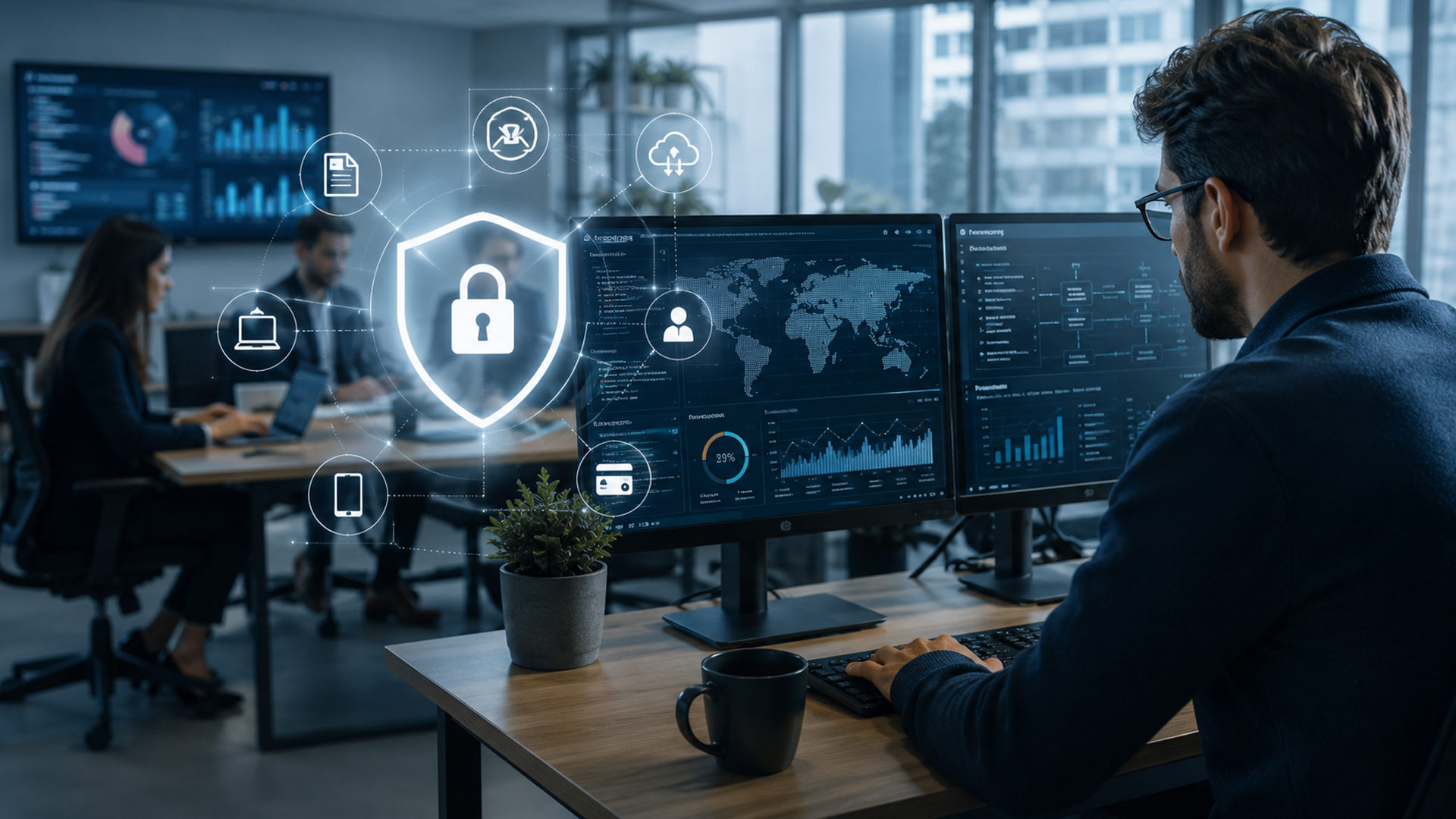
What Is Cybersecurity for Small Businesses in 2026
Small businesses in 2026 are facing cyber threats that are faster, smarter, and more automated than ever before. Attackers no longer target only large enterprises. They actively look for smaller companies with weaker defenses.
A single breach can lead to financial loss, downtime, legal issues, and damaged reputation. Most SMBs still rely on outdated security practices or basic antivirus tools, which are no longer enough.
Cybersecurity today is not optional. It is a core business requirement for survival and growth.
Quick Answer: What Cybersecurity Means for SMBs
Protecting business data from cyberattacks and unauthorized access
Securing networks, devices, emails, and cloud systems
Preventing ransomware, phishing, and data theft
Ensuring business continuity during attacks or failures
Meeting compliance and industry security requirements
In simple terms, cybersecurity helps small businesses stay operational, protected, and trusted in a digital-first economy.
Why Cybersecurity Matters for SMBs in 2026
Cybersecurity has become critical due to rising automation in cybercrime. Attackers now use AI-driven tools to scan, detect, and exploit vulnerabilities at scale.
Small businesses are especially vulnerable because:
They often lack dedicated IT security teams
Systems are fragmented across cloud and on-premise tools
Employees are frequently targeted through phishing emails
Security updates are delayed or inconsistent
The financial impact is also growing. A single ransomware attack can shut down operations for days or even weeks.
Beyond financial loss, businesses risk:
Customer trust erosion
Legal and compliance penalties
Permanent data loss
Cybersecurity is no longer just IT protection. It is business risk management.
Risks, Threats, and Compliance Challenges
Modern SMB threats are more advanced than ever:
Common Cyber Threats
Ransomware attacks locking critical data
Phishing emails targeting employee credentials
Business email compromise scams
Cloud misconfigurations exposing sensitive data
Insider threats from compromised accounts
Compliance Pressure
Businesses today must also comply with:
Data protection regulations
Industry-specific security standards
Client security requirements in contracts
Failure to comply can lead to fines, audits, and lost business opportunities.
Security is now tied directly to business credibility and growth.
MSP Cybersecurity Solutions for SMBs
Managed Service Providers (MSPs) play a critical role in protecting small businesses.
A modern MSP offers:
24/7 threat monitoring and response
Endpoint protection and patch management
Secure cloud configuration and management
Email security and phishing protection
Backup and disaster recovery systems
Explore more about services here:
MSPs bring enterprise-grade protection to SMBs without requiring a full internal security team.
Tools, Frameworks, and Best Practices
Strong cybersecurity relies on layered protection:
Core Tools
Endpoint detection and response (EDR)
Multi-factor authentication (MFA)
Secure firewalls and intrusion prevention
Cloud access security brokers
Best Practices
Regular software patching
Strong password policies
Employee security awareness training
Continuous monitoring and logging
Security Frameworks
Zero Trust architecture
Least privilege access control
Incident response planning
These combined practices reduce risk and improve resilience against modern threats.
Cost of Ignoring Cybersecurity
Ignoring cybersecurity can be significantly more expensive than investing in it.
Potential costs include:
Business downtime and lost revenue
Data recovery or ransom payments
Regulatory fines and legal action
Reputation damage and client loss
For most SMBs, a single breach can cost more than years of preventive security investment.
Prevention is always more cost-effective than recovery.
Step-by-Step MSP Cybersecurity Framework
MSP / Cybersecurity Value for Small Businesses
Small businesses often struggle with limited budgets, lack of expertise, and growing digital complexity. MSPs solve these challenges by providing centralized, proactive security management.
Key benefits include:
Continuous monitoring instead of reactive fixes
Access to cybersecurity experts without hiring internally
Predictable monthly cost instead of surprise breach expenses
Faster incident response and recovery times
Compared to in-house security teams, MSPs offer:
Lower operational cost
Faster deployment of security tools
Scalable protection as the business grows
Cybersecurity becomes a managed, ongoing service rather than a reactive burden.
Real-World Use Cases
Healthcare
Protects patient data, ensures compliance with regulations, and prevents ransomware attacks on medical systems.
Finance
Secures transactions, prevents fraud, and protects sensitive financial records.
Legal Firms
Safeguards confidential client data and case documents from breaches.
Retail SMBs
Protects payment systems, customer data, and e-commerce platforms.
SaaS Companies
Secures cloud infrastructure and prevents API exploitation.
Manufacturing
Protects operational systems and prevents production downtime from cyberattacks.
Each industry faces unique risks, but all require strong cybersecurity foundations.
FAQ: Cybersecurity for Small Businesses
What is cybersecurity for SMBs?
It is the practice of protecting small business systems, data, and networks from cyber threats and unauthorized access.
Why do small businesses need cybersecurity?
Because they are frequent targets of cyberattacks and often lack strong internal defenses.
How do MSPs protect businesses?
MSPs provide monitoring, threat detection, patching, backup, and incident response services.
What are common cyber threats?
Ransomware, phishing, email scams, and cloud misconfigurations are the most common.
Is cybersecurity required for compliance?
Yes, many industries require security controls to meet legal and regulatory standards.
How much does SMB cybersecurity cost?
Costs vary, but MSP-based security is typically more affordable than handling breaches or building internal teams.
Conclusion
Cybersecurity in 2026 is no longer optional for small businesses. Threats are faster, more automated, and more damaging than ever before.
Without proper protection, even a single attack can disrupt operations and impact long-term growth.
Partnering with a trusted MSP ensures continuous protection, compliance readiness, and business resilience.
Protect your business before risks become reality.
Explore solutions here: Kbytes
Book a cybersecurity consultation or request a full security audit today to strengthen your defenses and secure your future.

