
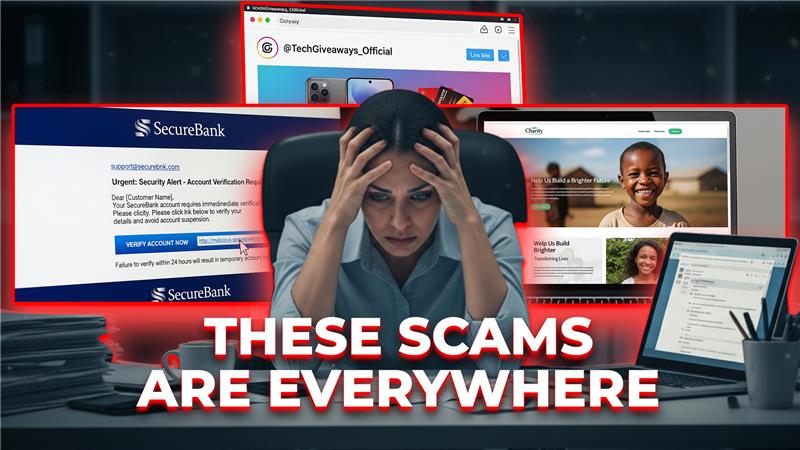
These Scams Are Everywhere (And They Work)
Cybercriminals don’t take days off, and they don’t wait for a “good” time to strike
They prey on moments when people are busy, distracted, or rushing.
Their tactics may change, but the goal is the same: to trick you into giving up money, data, or access. And they’ve gotten very, very good at it.
Here are 10 of the most common scams, and the quick actions that can stop them from working on you.
1. Phishing emails disguised as retailers
Fake emails that appear to come from your favourite store push bogus promotions, claim there’s an issue with your account, and link to malware or credential-stealing websites.
How to stop it:
Check the sender’s email address carefully.
Go to the retailer’s website directly instead of clicking links in emails.
Use anti-phishing tools and up-to-date security software.
2. Fake charity solicitations
Fraudsters create convincing charity websites and donation pages that tug at your emotions, then keep the money.
How to stop it:
Research the charity through official sources before donating.
Be wary of urgency or pressure tactics.
Pay through secure, trusted platforms.
3. Gift card scams
Offers for “discounted” gift cards or demands for payment in gift cards are almost always fraudulent.
How to stop it:
Buy only from trusted retailers.
Never pay invoices or debts with gift cards; legitimate companies don’t ask for that.
Inspect physical cards for tampering before buying.
4. Social media giveaway frauds
Fake contests are designed to collect personal details or lure you into clicking malware links.
How to stop it:
Verify the account is official.
Never share sensitive information for a giveaway.
Avoid links from unfamiliar profiles.
5. E-commerce site impersonations
Scammers build fake shopping sites that look real, then steal your payment information.
How to stop it:
Double-check the website URL and ensure it starts with “https://”.
Look for independent customer reviews.
Use credit cards for stronger fraud protection.
6. Mobile shopping app scams
Fraudulent apps disguise themselves as legitimate retailers to steal data or install malware.
How to stop it:
Download only from official app stores.
Check the developer name and user reviews.
Keep your apps and devices updated.
7. Travel deal scams
Phony travel agencies and “too-good-to-be-true” offers aim to grab your payment information.
How to stop it:
Book through reputable sources.
Ignore unsolicited offers.
Verify all reservation details before paying.
8. Package delivery notifications
Fake texts or emails claim your package is delayed or undeliverable, leading to phishing sites.
How to stop it:
Track orders directly through the retailer or carrier.
Never share personal information via email or text.
Delete suspicious messages and contact the carrier through official channels.
9. Cryptocurrency scams
Fraudsters promise huge returns or pose as legitimate crypto platforms to steal your funds.
How to stop it:
Research every offer and platform before sending money.
Use only reputable exchanges.
Avoid anything that promises “guaranteed” returns.
10. AI-powered personalized scams
Cybercriminals now use artificial intelligence to create hyper-realistic emails, voice messages and even video calls that look and sound like people you know.
How to stop it:
Verify unexpected requests through a second channel.
Train employees to recognize deepfakes and AI-generated content.
Be cautious of any message that combines urgency with a payment request.
The bottom line
These scams work because they target people, not systems. A little skepticism, consistent verification habits, and strong security tools can stop most of them.
If you’re a client, these protections are already built into your security strategy.
If you’re not, this list is a good starting point, but it’s not enough on its own.
Hackers adapt every day. Your defences should, too.

