
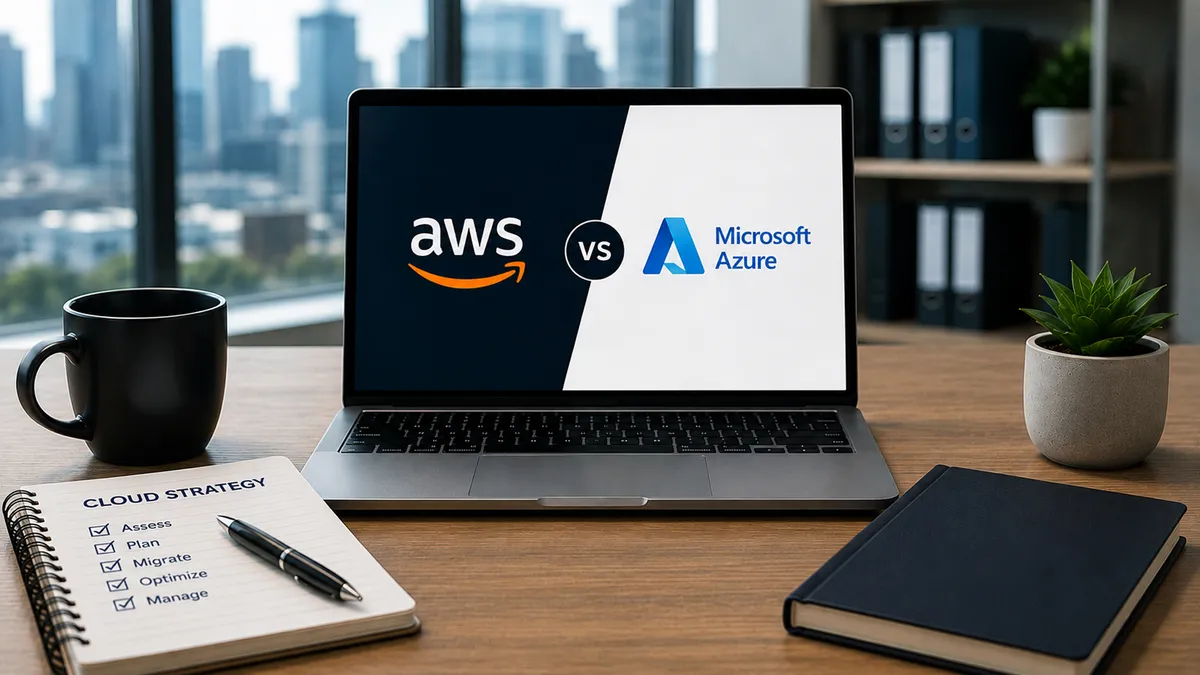
AWS vs Azure for Businesses in 2026
Choosing the right cloud platform is one of the most important IT decisions a business can make.
AWS and Microsoft Azure dominate the cloud market, but they serve slightly different needs.
For SMBs, the decision often comes down to cost, ease of use, and integration with existing systems.
Understanding the differences helps avoid long-term inefficiencies and overspending.
Quick Answer: AWS vs Azure
AWS offers the largest global cloud infrastructure and flexibility
Azure integrates best with Microsoft tools like Office 365
AWS is often preferred for advanced cloud-native applications
Azure is easier for businesses already using Microsoft systems
Both offer strong security and scalability
AWS Overview
Amazon Web Services (AWS) is the most widely used cloud platform globally.
Strengths
Extensive global infrastructure
Highly scalable services
Advanced cloud-native tools
Large ecosystem of integrations
Best For
Tech-driven companies
SaaS platforms
Startups needing flexibility
Azure Overview
Microsoft Azure is deeply integrated into the Microsoft ecosystem.
Strengths
Seamless integration with Windows Server and Microsoft 365
Strong hybrid cloud capabilities
Enterprise-grade security tools
Simplified management for Microsoft environments
Best For
SMBs using Microsoft tools
Hybrid infrastructure environments
Enterprises transitioning to cloud
AWS vs Azure Comparison
Ease of Use
Azure is generally easier for Microsoft-based environments.
AWS has a steeper learning curve but more flexibility.
Pricing
Both platforms use pay-as-you-go models.
Costs vary depending on usage and configuration.
Security
Both offer enterprise-grade security features.
Azure has stronger built-in identity management for Microsoft users.
Scalability
AWS leads in global scalability and service variety.
Azure performs well in hybrid cloud scaling.
Risks of Choosing the Wrong Platform
Higher long-term cloud costs
Integration challenges
Performance inefficiencies
Security misconfigurations
How KBytes Helps Choose the Right Cloud Platform
KBytes evaluates your infrastructure and business needs to recommend the right cloud strategy.
Services Include
Cloud readiness assessment
AWS and Azure architecture planning
Migration and deployment support
Security configuration and optimization
Learn more about managed IT services for cloud infrastructure support.
Explore cybersecurity solutions for secure cloud environments.
Best Practices for Cloud Selection
Analyze existing IT systems
Consider long-term scalability needs
Evaluate security and compliance requirements
Factor in internal IT skill levels
Cost Considerations
Cloud pricing depends on usage, storage, and compute requirements.
Without proper planning, businesses often overspend on unused resources.
Proper optimization can significantly reduce costs over time.
Step-by-Step Decision Framework
Step 1: Assessment
Evaluate current IT environment.
Step 2: Requirement Mapping
Define business and technical needs.
Step 3: Platform Comparison
Compare AWS and Azure based on requirements.
Step 4: Pilot Testing
Run small-scale tests before full migration.
Step 5: Implementation
Deploy selected cloud platform with optimization.
Why SMBs Choose KBytes
Vendor-neutral cloud consulting
Cost-optimized architecture design
Secure deployment and migration
Ongoing cloud management support
Visit the homepage to explore cloud services.
Real-World Use Cases
SaaS companies prefer AWS for scalability.
SMBs using Microsoft 365 prefer Azure integration.
Healthcare organizations use Azure for compliance.
Finance firms use AWS for data-heavy workloads.
Retail businesses choose based on cost optimization.
FAQs
Conclusion
AWS and Azure are both powerful cloud platforms.
The right choice depends on your infrastructure, goals, and budget.
With expert guidance, businesses can avoid costly mistakes and build scalable cloud systems.
Contact KBytes to get a cloud assessment and choose the right platform for your business.

